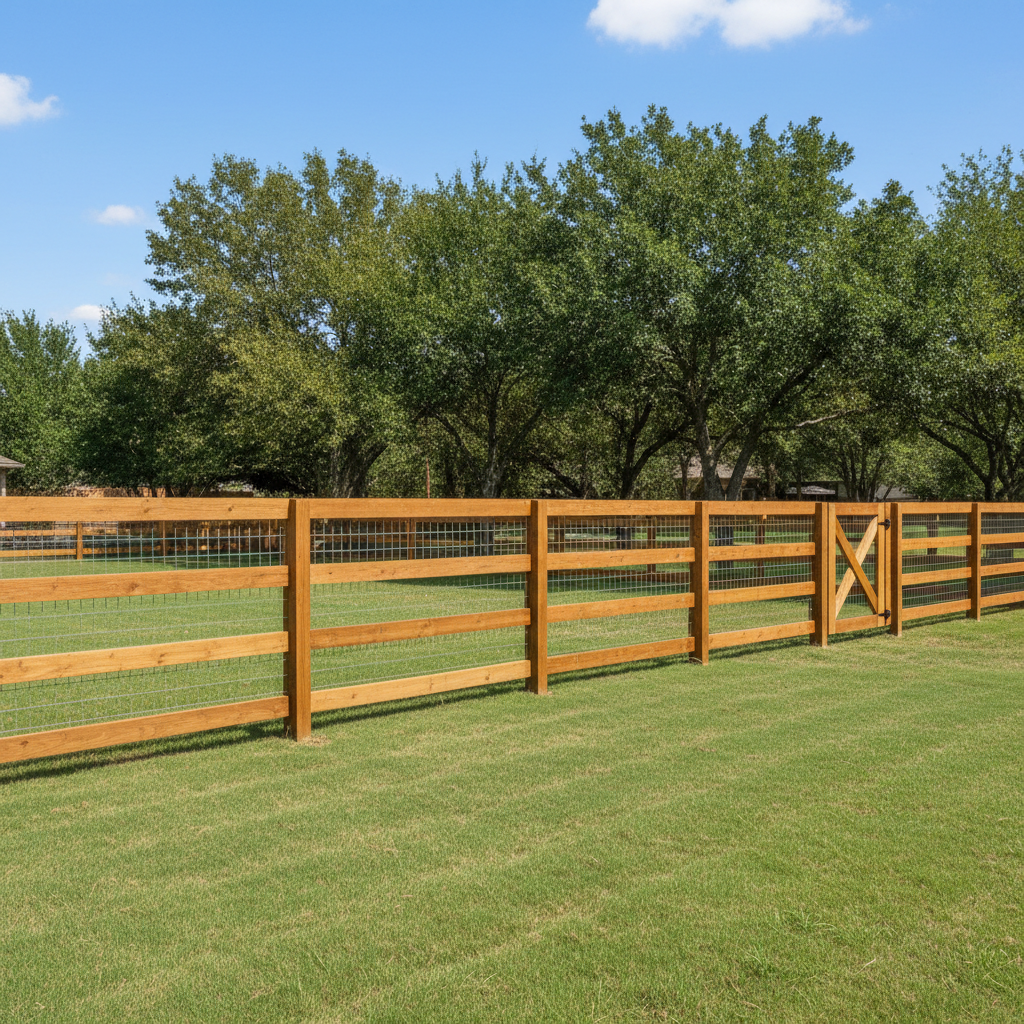
Your Farm Fence Takes a Beating. Let's Keep It Strong.
You've got a farm or ranch here in New Braunfels, and you know your fences are more than just property lines. They're about keeping your livestock safe, protecting your land, and sometimes, just keeping the deer out of your prize garden. I've seen a lot of fences come and go in this area, and I can tell you, a little maintenance goes a long way. Our Texas weather, with those scorching summers and occasional ice storms, can really put a fence to the test. Let's talk about how to keep yours in top shape.
Extending the Life of Your Farm Fence
When we're building a new fence, or even repairing an old one, there are a few things we do at New Braunfels Fencing Pros to make sure it lasts. But even the best-built fence needs some love. For wooden posts, especially those in the ground, proper drainage is key. If water sits around the base of a post, it's going to rot faster, plain and simple. Make sure the ground slopes away from the post, or consider adding gravel around the base for better drainage. For metal posts, like T-posts or pipe fencing, rust is the enemy. A good coat of rust-inhibiting paint every few years can add decades to its life, especially where the posts meet the ground or where welds are exposed.
Another big one is tension. Whether you've got barbed wire, woven wire, or high-tensile, keeping the wire properly tensioned prevents sagging, which can lead to animals pushing through or getting tangled. Over-tensioning can snap wires in cold weather, though, so it's a balance. We often use H-braces or corner braces that are built to withstand the constant pull, but even those can shift over time, especially with our expansive clay soils around here.
Regular Maintenance: What to Look For
You don't need to inspect your fence with a magnifying glass every day, but a regular walk-through is a smart move. I'd say at least once a month, or after any significant weather event like a big thunderstorm or a freeze. Here's what I'm looking for:
- Loose Wires: Are there any sections sagging? Are the staples pulled out of wooden posts? Re-tensioning or re-stapling these can prevent a small problem from becoming a big one.
- Damaged Posts: Check for rotten wooden posts, especially at ground level. Look for bent or broken metal posts. Sometimes a vehicle or a falling tree limb can do a number on a post.
- Broken Insulators: If you've got electric fencing, make sure all your insulators are intact and doing their job. A cracked insulator can short out your whole system.
- Gate Hardware: Latches, hinges, and springs take a lot of abuse. Make sure they're all working smoothly and aren't rusted or bent. A gate that doesn't close properly is no good to anyone.
- Vegetation: Keep brush and weeds cleared away from your fence line. Not only does it make inspection easier, but heavy vegetation can hold moisture against wooden posts, promoting rot, and can even short out electric fences.
Warning Signs of Bigger Problems
Sometimes, what looks like a small issue is a symptom of something bigger. If you're constantly re-tensioning the same section of wire, you might have a problem with an anchor post or a brace that's giving way. If multiple wooden posts in a row are rotting, it could be a drainage issue along that entire stretch. Don't ignore these patterns. They're telling you something needs more attention than a quick fix.
Another big warning sign is any part of your fence that's leaning significantly. A leaning post or section of fence isn't just unsightly; it's under stress and could fail completely, especially during high winds or if livestock lean on it. This often points to a foundation issue, whether it's a rotten post or a brace that's no longer holding.
When to Call a Professional
Look, I'm all for doing things yourself, but there are times when you need to call in the pros. If you're dealing with extensive rot, multiple broken posts, or significant structural damage, it might be beyond a simple DIY repair. Trying to fix a major fence failure yourself can sometimes lead to more damage or an unsafe situation, especially with high-tension wires.
If you're seeing widespread issues, or if you just don't have the time or specialized tools to do the job right, that's when you should give us a call. We've got the experience and the equipment to tackle big repairs or even full replacements efficiently and effectively. We can assess the damage, figure out the root cause, and get your farm fence back to doing its job right.
```